Turkish coffee has played a unique role in culinary and social traditions for centuries, and at Istanbul Kitchen in Tysons Corner Center, a simple cup of Turkish coffee offers guests far more than a caffeine boost, it delivers a moment shaped by history, hospitality, and ritual. Carefully prepared and served with intention, Turkish coffee reflects a culture that values slowing down, connecting, and appreciating flavor beyond convenience. Each cup carries the legacy of Ottoman coffeehouses, where conversation, reflection, and community came together over a shared table.
In today’s fast-paced, grab-and-go coffee culture, Turkish coffee feels refreshingly different. Its bold aroma, velvety texture, and unfiltered richness invite guests to pause and savor rather than rush. Whether enjoyed after a satisfying meal or during a relaxed visit, Turkish coffee at Istanbul Kitchen becomes part of the dining experience instead of just an add-on beverage.
This article explores how Turkish coffee stands apart from modern brewing styles, the social meaning behind the ritual, and the way it completes the authentic Turkish dining experience at Istanbul Kitchen, turning an ordinary cup into a memorable cultural moment.
The Origins of Turkish Coffee
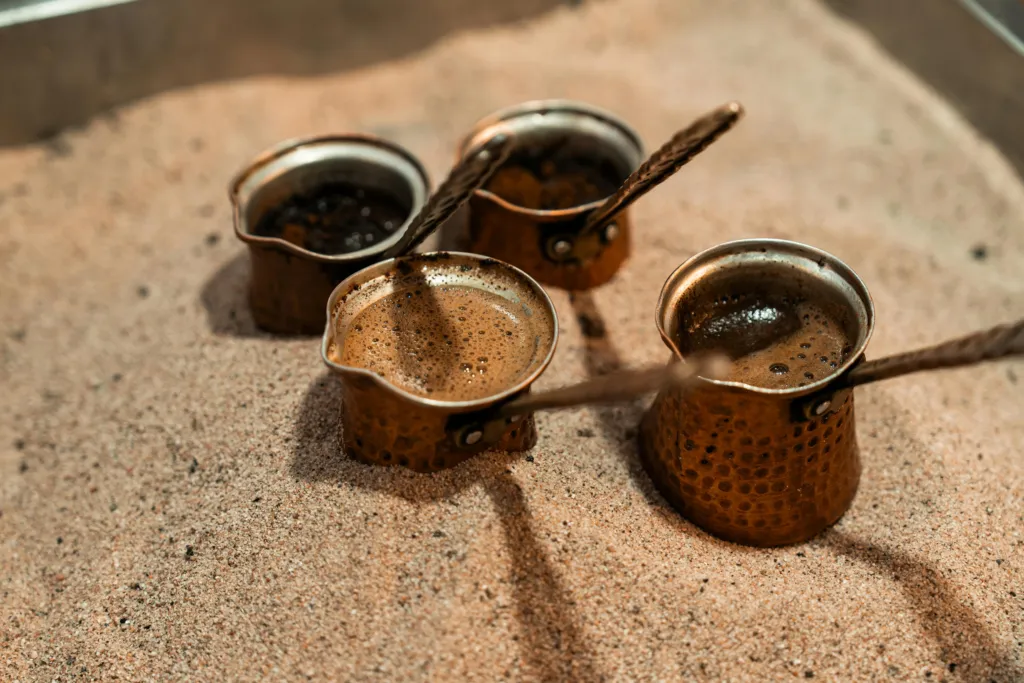
Turkish coffee is one of the oldest brewing methods in the world, with roots reaching back to the 16th century Ottoman Empire, when coffee first gained popularity across Istanbul and beyond. Introduced through trade routes linking Africa, the Middle East, and Europe, coffee quickly became woven into everyday life. Ottoman coffeehouses emerged as important social centers where people gathered not only to drink coffee, but also to discuss news, art, business, and politics. From there, the tradition traveled across the Middle East, the Balkans, and into Europe, shaping coffee culture long before modern cafés existed.
What makes Turkish coffee unique is not the bean itself, but the preparation style. The beans are ground into an ultra-fine, almost flour-like powder rather than the coarse grinds used for drip or espresso. This powder is combined with cold water and, if preferred, sugar, then slowly heated in a small, long-handled pot known as a cezve. Instead of being filtered, the coffee is gently brought to a foam and poured directly into the cup, grounds and all.
As it settles, the grounds sink to the bottom, creating a thick, velvety texture and concentrated flavor. The result is a coffee that is bold, aromatic, and meant to be sipped slowly. This careful, unhurried brewing process reflects the philosophy behind Turkish coffee itself: it is not about speed or volume, but about craftsmanship, tradition, and enjoying the moment one cup at a time.
The Brewing Method: An Art of Patience
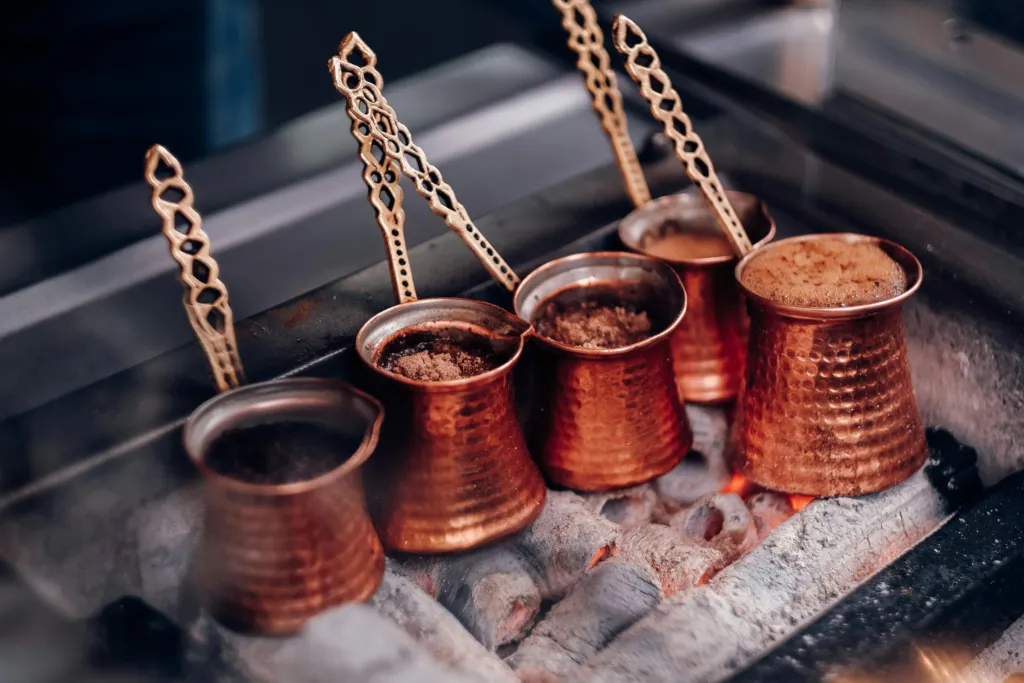
What truly separates Turkish coffee from other brewing methods is its careful, ritual-like preparation. Finely ground coffee beans, almost the texture of powder, are combined with cold water and, if desired, sugar, then placed into a long-handled pot called a cezve (also known as an ibrik). The mixture is stirred before heating, allowing the flavors to blend evenly from the very start.
Unlike espresso, pour-over, or drip coffee, Turkish coffee is never filtered. Instead, the entire mixture including the grounds, is slowly heated over low flame. As the coffee warms, a dense foam forms on top, which is gently preserved and spooned into each cup before the liquid is poured. This process creates a rich body and a layered aroma that feels fuller than most modern brewing styles.
Because the grounds remain in the cup, the coffee continues to develop as it rests, delivering a deep, concentrated flavor and velvety texture. There is no rushing Turkish coffee. The method encourages patience and presence, transforming a simple beverage into a moment of pause. Rather than a grab-and-go habit, Turkish coffee is meant to be savored slowly, honoring both craftsmanship and tradition in every sip.
A Social Tradition With Deep Roots
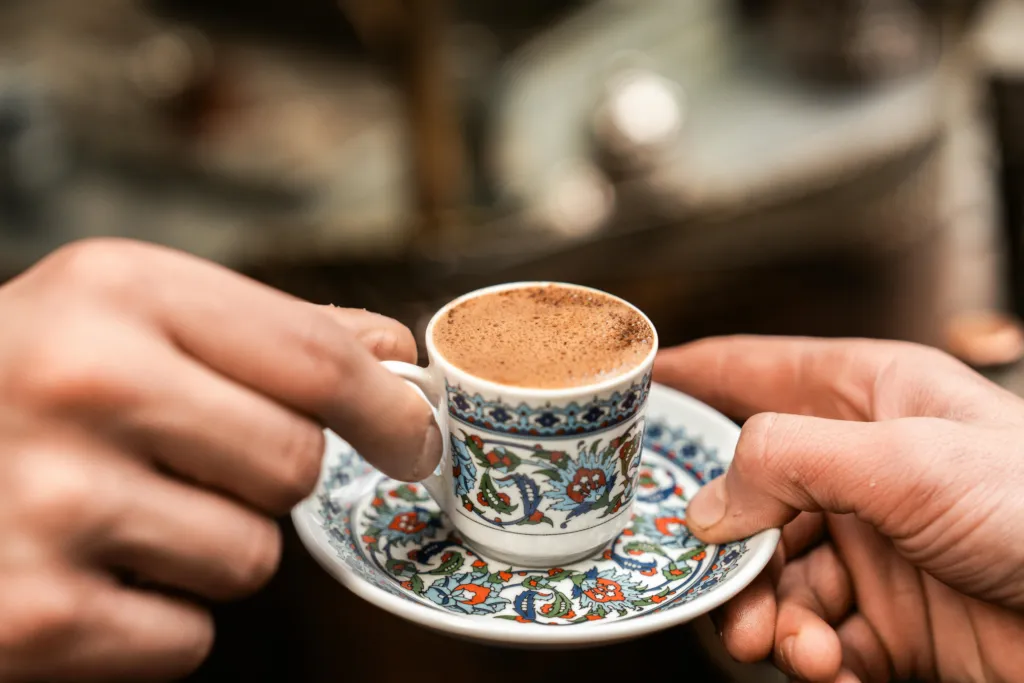
Turkish coffee is deeply woven into the fabric of conversation, hospitality, and community. For centuries, it has been more than a beverage, it has been a social tradition served in homes, neighborhood coffeehouses, and meaningful gatherings. In Ottoman culture, coffeehouses were places where people exchanged ideas, told stories, and built relationships, making coffee a bridge between people rather than just a source of energy.
Sharing a cup of Turkish coffee is considered a genuine gesture of welcome. Guests are often offered coffee soon after arriving, signaling care and respect. It’s typically paired with a small sweet, such as Turkish delight, to balance the coffee’s bold flavor and extend the experience. Even the act of preparing it carries intention, as the host considers sweetness preferences before brewing.
This cultural emphasis transforms Turkish coffee into a moment of connection. It invites people to slow down, sit together, and enjoy conversation without distractions. Rather than drinking quickly, guests linger, talk, and savor both the coffee and the company. In this way, Turkish coffee becomes not just something you consume, but something you experience—a shared pause that strengthens relationships and celebrates hospitality.
Rituals and Customs Around the Cup
Turkish coffee is surrounded by traditions that turn a simple drink into a meaningful experience. From how it’s prepared to how it’s served and enjoyed, each step reflects respect, hospitality, and cultural symbolism. These rituals slow the pace of the meal and invite conversation, making the moment just as important as the flavor itself.
Understanding the customs around Turkish coffee reveals why it remains timeless. Whether shared among friends, offered to guests, or enjoyed after a meal, the cup carries stories, etiquette, and small gestures that transform coffee into a ritual rather than a routine.
Serving and Enjoying
A proper serving of Turkish coffee is intentionally simple yet refined, designed to heighten the experience rather than rush it. The coffee is presented in a small porcelain cup so the flavors remain concentrated and warm. Alongside it, a glass of water is traditionally served first. Sipping the water before the coffee clears the palate, allowing the drinker to notice the aroma, texture, and subtle bitterness of the brew without distraction.
One of the most valued elements is the foam, known as köpük. This delicate layer forms during slow heating in the cezve and signals careful preparation. Thick, velvety foam adds aroma, softness, and visual appeal to the cup. In Turkish culture, serving coffee without foam is often seen as incomplete, because the foam represents both craftsmanship and respect for the guest. Together, the cup, water, and foam create a balanced ritual that turns each serving into a small ceremony rather than just another drink.
Fortune-Telling With Grounds
One of the most intriguing traditions tied to Turkish coffee is reading the leftover grounds, a custom known as tasseography. Because Turkish coffee is unfiltered, a fine layer of sediment remains at the bottom of the cup. After finishing the drink, the cup is gently turned upside down onto its saucer and left to cool. As the grounds slide and settle, they form shapes along the inside of the cup.
A reader then interprets these patterns, often seeing symbols, paths, or figures that suggest themes such as travel, relationships, or upcoming opportunities. While taken light-heartedly, the ritual adds a playful and social dimension to coffee drinking. It invites conversation, curiosity, and connection, transforming a simple cup of coffee into an interactive cultural experience that lingers long after the last sip.
Turkish Coffee at Istanbul Kitchen
At Istanbul Kitchen in Tysons Corner Center, Turkish coffee is more than just a beverage, it’s an integral part of the authentic dining experience, served alongside handcrafted mains and traditional desserts that showcase the depth of Turkish cuisine. The coffee’s rich, concentrated flavor complements the menu, creating a harmonious balance that elevates every bite and sip.
Pairing with Dessert: Turkish coffee is particularly well-suited to classic sweets such as baklava, revani, or pistachio cake. Its bold, slightly bitter notes counterbalance the sugar and richness of these desserts, allowing each flavor to shine without overwhelming the palate. The combination is both satisfying and indulgent, highlighting the interplay between sweet and savory traditions in Turkish dining.
A Perfect Post-Meal Ritual: Beyond flavor, Turkish coffee serves as a thoughtful conclusion to the meal. After enjoying hearty dishes like manti or a flavorful mezze platter, the coffee offers a reflective pause, a moment to relax, linger over conversation, and savor the lingering aromas and textures of the cuisine. It transforms the end of the meal into a shared experience, reinforcing hospitality and connection while providing a gentle, satisfying finish.
Together, these elements make Turkish coffee at Istanbul Kitchen not just a drink, but a ceremonial close to an authentic culinary journey, leaving guests with both flavor and memory.
The Cultural Richness Behind Every Cup
Turkish coffee’s cultural significance extends far beyond its rich flavor. In 2013, UNESCO recognized it as part of the Intangible Cultural Heritage of Humanity, acknowledging not just the beverage itself but the centuries-old social rituals and traditions that accompany it. This designation underscores how deeply embedded Turkish coffee is in daily life, hospitality, and communal practices.
The tradition embodies hospitality, refinement, and friendship, offering a structured yet intimate way to welcome guests, foster conversation, and honor shared moments. Serving and enjoying Turkish coffee is an intentional act, reflecting care for both flavor and company.
These customs reveal a broader cultural philosophy: one that values slowing down, being present, and creating space for meaningful connection. Each cup becomes a small ceremony, where attention to detail, respect for guests, and the simple pleasure of gathering converge, preserving a practice that is as much about human interaction as it is about the drink itself.
What Makes Turkish Coffee Unique
Turkish coffee stands apart from other brewing methods due to its distinctive preparation, equipment, and sensory experience.
The Grind: The beans are ground far more finely than for espresso or drip coffee, producing a powdery texture that allows the coffee to release maximum flavor. This ultra-fine grind contributes to the drink’s rich, concentrated taste and thick, velvety body, giving each sip a depth and intensity that standard methods can’t replicate.
The Pot — Cezve: Preparation takes place in a cezve, a small, long-handled pot designed to distribute heat evenly. This slow, careful heating encourages the development of a dense, aromatic foam on top—considered a hallmark of a skilled coffee maker. The cezve allows the brewer to control temperature and timing precisely, enhancing both texture and flavor.
Unfiltered and Full-Bodied: Unlike espresso or drip coffee, Turkish coffee is unfiltered, leaving natural oils and fine coffee particles in the cup. This gives it a full-bodied, aromatic quality that is both robust and complex, offering a drinking experience that engages both taste and smell.
Together, these elements transform Turkish coffee from a simple caffeinated beverage into a crafted ritual, where care, technique, and tradition combine to create a drink that is rich, flavorful, and culturally meaningful.
Turkish Coffee in Modern Context
Unlike many modern coffee traditions that prioritize speed and convenience, from drive-thru espressos to automated pour-overs — Turkish coffee is intentionally slow and deliberate. Every step, from grinding the beans to carefully heating the mixture in a cezve, is designed to encourage savoring, conversation, and shared moments.
Even in today’s fast-paced world, the ritual of Turkish coffee remains meaningful. Serving and drinking it is about more than caffeine: it’s a chance to pause, connect with others, and honor a centuries-old practice. This blend of history, craftsmanship, and social interaction ensures that Turkish coffee continues to resonate across generations, both in its native Turkey and around the globe.
Turkish Coffee and Hospitality
Serving Turkish coffee goes beyond simply offering a beverage, it’s a gesture of respect, hospitality, and connection. Presenting a cup signals to guests, “You are welcome here,” and creates space for conversation, reflection, and shared enjoyment.
In traditional Turkish homes, coffee service is woven into daily etiquette, whether for casual visits, family gatherings, or more formal entertaining. Every cup carries an unspoken message of care, attentiveness, and goodwill.
This tradition is mirrored in restaurants like Istanbul Kitchen, where Turkish coffee is thoughtfully integrated into the dining experience. Paired with desserts, served after mezze, or offered alongside main courses, it becomes a cultural touchstone—connecting patrons to centuries of ritual, flavor, and social warmth.
In Conclusion
Turkish coffee is far more than just coffee. It’s a crafted experience rooted in centuries of tradition, social connection, and thoughtful preparation. From its unique brewing method to the conversations it inspires, every cup tells a story — one that you can enjoy at Istanbul Kitchen alongside savory Turkish dishes and desserts.
Elevate your next meal with a cup of Turkish coffee. Take time to savor each sip, share stories with friends, and let the moment linger. Whether you pair it with dessert or enjoy it as a cultural ritual of your own, Turkish coffee invites you into a tradition worth experiencing again and again. Make your visit to Istanbul Kitchen meaningful — one cup at a time.